Cystoscopy: what to expect

Cystoscopy lets the doctor look inside the bladder directly and is often done as a day-case.
During cystoscopy the doctor uses a thin camera-tipped tube to look inside the urethra and bladder.
Why is it performed?
- To investigate blood in the urine - For urinary symptoms that do not respond to treatment - To follow up bladder tumours
Afterwards
Mild burning may last a few hours; drinking fluids usually helps. Contact your doctor if fever or severe pain develops.
Related articles
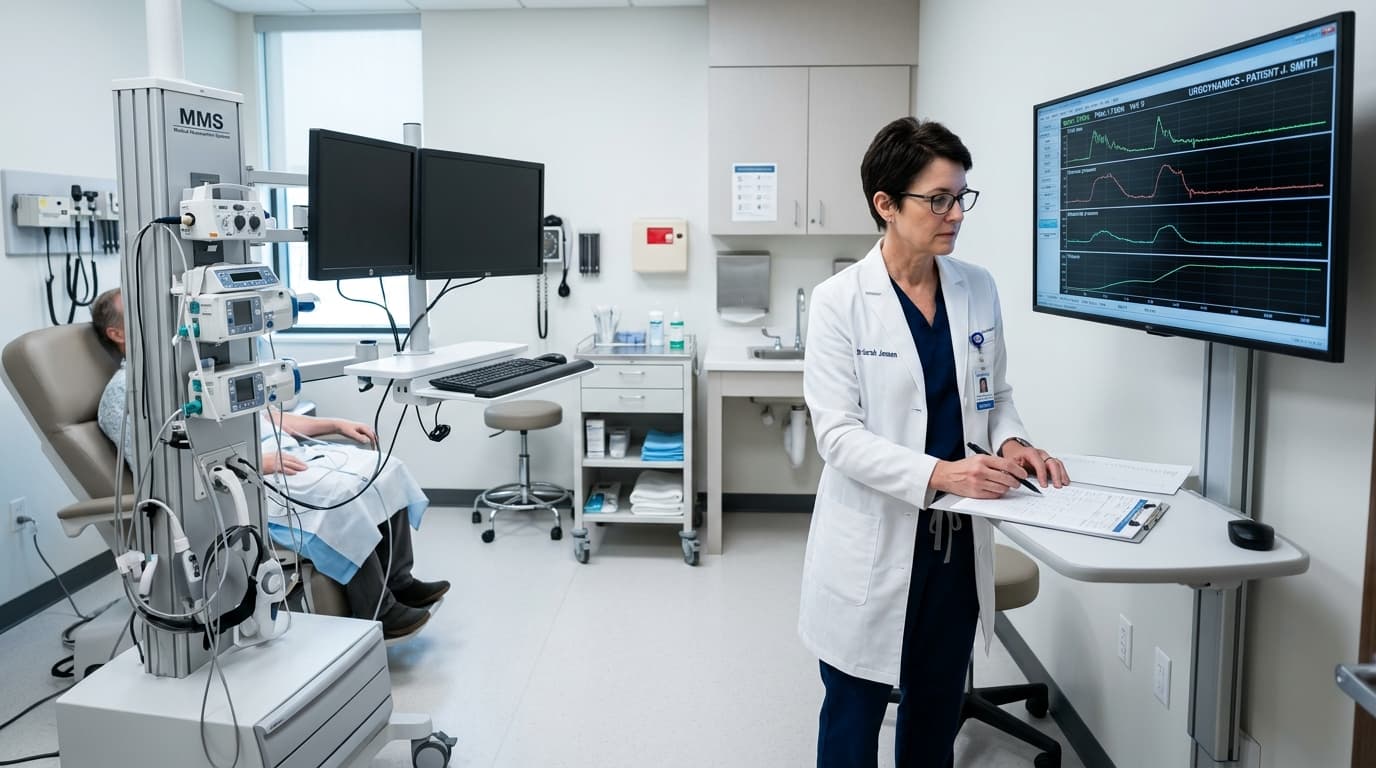
What is a urodynamic (bladder function) test?
Urodynamics measures how the bladder and urethra work and helps define the type of disorder.

Types of urinary incontinence and how they are diagnosed
Incontinence should not be dismissed as a normal result of ageing or childbirth; identifying the type is the first step to treatment.

How to recognise the symptoms of kidney stones
Flank pain, blood in the urine and nausea are common signs — but not every stone causes symptoms.